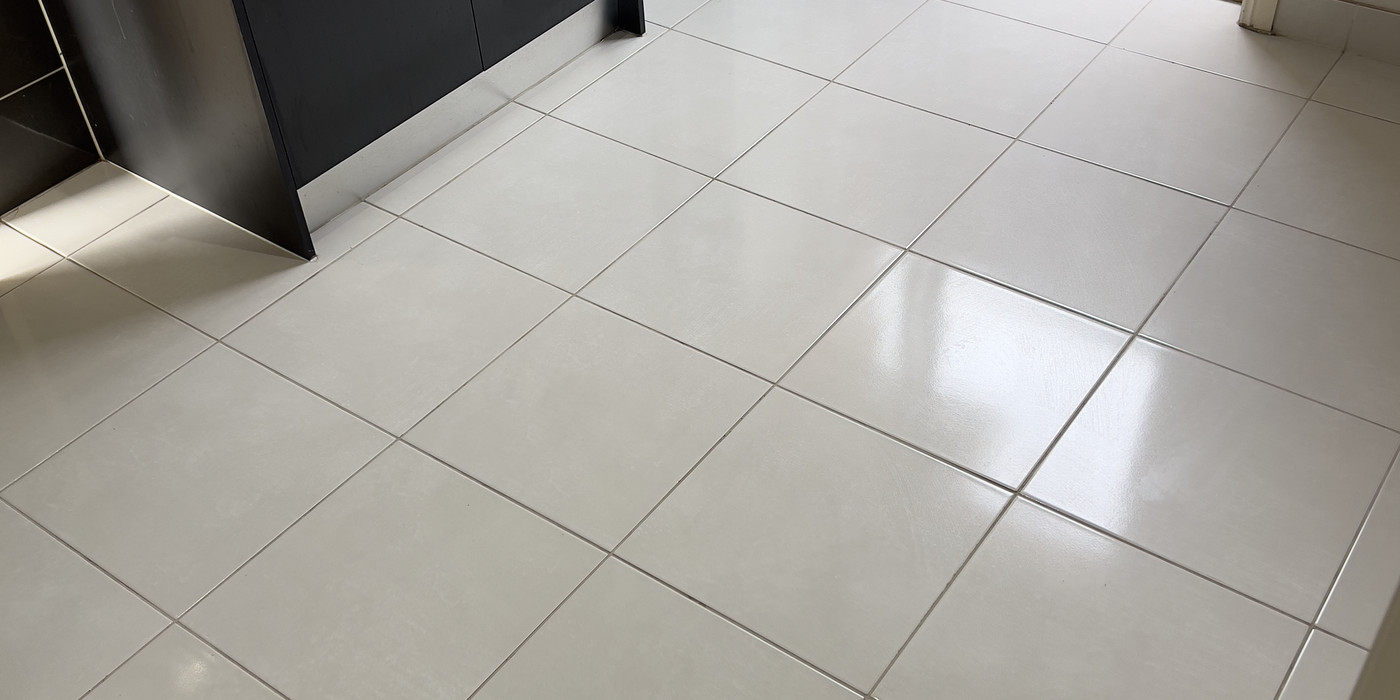
Nineteen guides on this site and I’ve never written the one about hard floors, which is odd, because floorboards cause more arguing at a final inspection than carpet does. Carpet you can steam clean. A scratched floorboard you can’t undo, and that’s exactly when an agent starts talking about polishing quotes.
So here is the standard, and it is one line long.
What the law actually asks of your floor
Consumer Affairs Victoria issues Director’s Guidelines under the Residential Tenancies Act, and VCAT has to have regard to them when it decides a cleanliness dispute. Guideline 2 lists what a reasonably clean property looks like room by room. The floors entry reads:
Floors to be washed and free from dirt, dust, and stains.
Washed. That’s it. Not polished, not resealed, not buffed. Mop them properly, get the corners and the edges where the mop head doesn’t reach, and you have met the standard the tribunal will be reading from.
The same guideline is worth quoting on the general point too: reasonably clean “does not mean spotless or pristine nor does it mean terribly messy; the standard should sit somewhere in the middle and will depend on the nature, age, and circumstances of the rented premises.”
Cleaning and repair are two different duties
This is where most floor disputes go wrong, so it’s worth separating them.
Section 63 of the Act is your cleaning duty. Leave the place reasonably clean, and in the same condition it was in when you moved in, once fair wear and tear is allowed for. Section 61 is a separate duty not to intentionally or negligently cause damage, and subsection 2 says damage doesn’t include fair wear and tear.
A dull, worn floor finish is neither. It’s the finish reaching the end of its life. Guideline 3 puts it plainly:
Fittings and fixtures deteriorate over time. Normal living in a property causes a decline in the standard of that property. The RRP is not entitled to compensation merely because things wear out.
So when a quote for re-polishing lands in your inbox, the question to ask is whether you did something to that floor beyond using it.
Where the line sits: wear or damage
Guideline 3 sets out a two-column comparison. Two of the rows are about floors:
| Fair wear and tear | Damage |
|---|---|
| Scuff marks on a wooden floor | Badly scratched or gouged wooden floors, caused, for example, by dropping something heavy on the floor |
| Traffic marks on carpet | Carpet stains caused by burns, overwatered indoor plants, or pets |
The pet version of the table repeats it: scuff marks on a wooden floor are wear, badly scratched or gouged floors from claws or bite marks are damage.
The word doing the work is “badly”. A floor that has been walked on for three years and shows it is wear. A gouge where a fridge got dragged across the boards, or a bloom of water damage under a pot plant that was never lifted, is on you.
Four times VCAT said no
Guideline 3 also lists claims the tribunal disallowed or reduced by applying fair wear and tear. Four of them are floors:
- Minor scratches to polished floorboards where the floor was polished 12 years ago.
- A minor chip in one laundry tile, found to be damaged in the course of “ordinary living”.
- Chips in slate flooring which was in poor condition at the start of the tenancy.
- Damaged jet covers in a spa bath where the covers were already fatigued. Not a floor, but the same logic, and useful to have in your pocket.
Read what those have in common. In every case the item’s age or its starting condition decided the outcome. That’s your argument, and it’s usually stronger than arguing about the mark itself.
Age is a number you can actually use
Regulation 90 prescribes the ATO’s Rental Properties 2020 Guide as the depreciation scale VCAT must consider when working out what a renter owes for a damaged part of the property. Guideline 3 gives the worked example: a renter of eight years couldn’t be expected to pay to replace carpet, because carpet is treated as having an eight-year life.
The same reasoning applies to a floor finish. If the boards were last done a decade before you arrived, the remaining value in that finish was close to nothing by the time you handed the keys back. Ask when the floor was last polished, and ask in writing.
The professional cleaning clause
Plenty of leases carry a line about professional floor cleaning. Since 29 March 2021, Regulation 12 limits what that clause can do. A rental provider can only require professional cleaning, or cleaning to a professional standard, if one of two things is true:
- The property was professionally cleaned immediately before your tenancy started, and you were told that at the time, usually on the condition report; or
- It’s needed to restore the property to the condition it was in at the start, having regard to the condition report and allowing for fair wear and tear.
“Immediately” is doing real work there. The guideline says a clean performed months or years before you took possession doesn’t count. Our carpet steam cleaning guide walks through the same clause where it bites hardest.
Vinyl and tile: the two things worth checking
Hard floors fail in specific places, and they’re the places a mop skips.
Grout lines
Tiled kitchens and bathrooms wear in the grout, not on the tile face. Grout that has darkened evenly across a whole room is wear. A stain in one spot where something was spilled and left is a cleaning job while you still have the keys. Scrub it with a stiff brush before you decide it’s permanent. Most of it isn’t.
Vinyl edges and seams
Vinyl lifts at doorways and along the edge of a kitchen where water gets under it. Photograph anything already lifting. Don’t press it back down. If it was lifting when you moved in and it’s on the entry report, that’s the end of the conversation.
Skirting boards sit at the same height as your mop and take the damage. Guideline 2 asks for walls and skirting boards to be reasonably free of scuff marks, fingerprints and dust. Wiping them takes ten minutes and it’s the difference between a floor that reads as cleaned and one that reads as rushed. There’s more on that in the wall marks guide.
What to do on the last day
Tenants Victoria’s advice on moving out is blunt and it’s the right advice: take plenty of photos and videos through the whole property before you hand back the keys, and go to the final inspection so you can watch the exit report being filled in.
For floors that means four things:
- Mop everything, including under where the furniture was.
- Photograph each floor wide, then close on any mark you know is there.
- Pull up the entry condition report and check whether that mark is already on it.
- If it isn’t, and it’s a scuff and not a gouge, say so in writing at the inspection instead of after the claim arrives.
If a deduction for floors turns up anyway, the process from there is the same as any other bond claim. The RTBA route and the 14-day clock decide it, and Guideline 3 is what you attach.
The short version
Victoria asks one thing of your floors at the end of a lease: washed, free of dirt, dust and stains. Scuff marks on timber are fair wear and tear, badly scratched or gouged boards are damage, and a worn finish on a floor last polished years ago is the rental provider’s cost. Photograph the floor on the way out and compare it to the entry condition report. That comparison wins more of these than any amount of extra mopping.
Frequently asked questions
Do I have to polish or reseal floorboards before I move out?
No. Polishing and resealing are maintenance, not cleaning. The Consumer Affairs Victoria cleanliness guideline sets one standard for floors at the end of a tenancy. They must be washed, and free from dirt, dust and stains. Restoring a worn finish is the rental provider's cost, and their damage guideline says outright that a rental provider is not entitled to compensation merely because things wear out.
Are scratches on floorboards fair wear and tear in Victoria?
It depends how bad they are. Consumer Affairs Victoria's Guideline 3 puts "scuff marks on a wooden floor" in the fair wear and tear column and "badly scratched or gouged wooden floors, caused, for example, by dropping something heavy on the floor" in the damage column. VCAT has to have regard to that guideline when it decides these disputes.
Can they charge me for a chipped or cracked tile?
Only if you caused it intentionally or through negligence, and they can prove it. Guideline 3 lists two tile claims VCAT knocked back. One was a minor chip in one laundry tile that happened in the course of ordinary living. The other was chips in slate flooring that was already in poor condition when the tenancy started.
Does my lease clause about professional floor cleaning override this?
Not on its own. For agreements signed after 29 March 2021, Regulation 12 only lets a rental provider require professional cleaning if the place was professionally cleaned immediately before you moved in and you were told so, or if it's needed to restore the property to its starting condition allowing for fair wear and tear.
What if the floor was already scratched when I moved in?
Then it's on the condition report, and that report is your evidence. VCAT has held that "reasonably clean" doesn't mean a condition better than what the condition report shows. Photograph the floor again on the way out so you have both ends of the comparison.
This guide is general information based on official sources current at the date shown above. Tenancy law differs by state and by agreement. For decisions about your own bond, check the official body linked above or get advice for your situation.
Keep reading
Short answer: usually not by law. Victorian renters owe 'reasonably clean', and professional cleaning clauses are only valid in one narrow case. Here's when steam cleaning is genuinely worth paying for, what it costs, and the receipt trick that ends bond arguments, from a working carpet technician.
In Victoria, a 'professional carpet cleaning' clause is only enforceable in one narrow situation. Here's what the Residential Tenancies Act actually requires, what counts as fair wear and tear, and how to handle an agent who insists, from a carpet cleaning technician.
Victoria's Residential Tenancies Act says damage does not include fair wear and tear, which it defines as deterioration from reasonable use and natural forces. Consumer Affairs Victoria's Guideline 3 gives side-by-side examples, and VCAT has to weigh the age of an item using the ATO depreciation guide. An 8-year-old carpet is the example CAV uses for one a renter can't be charged to replace.