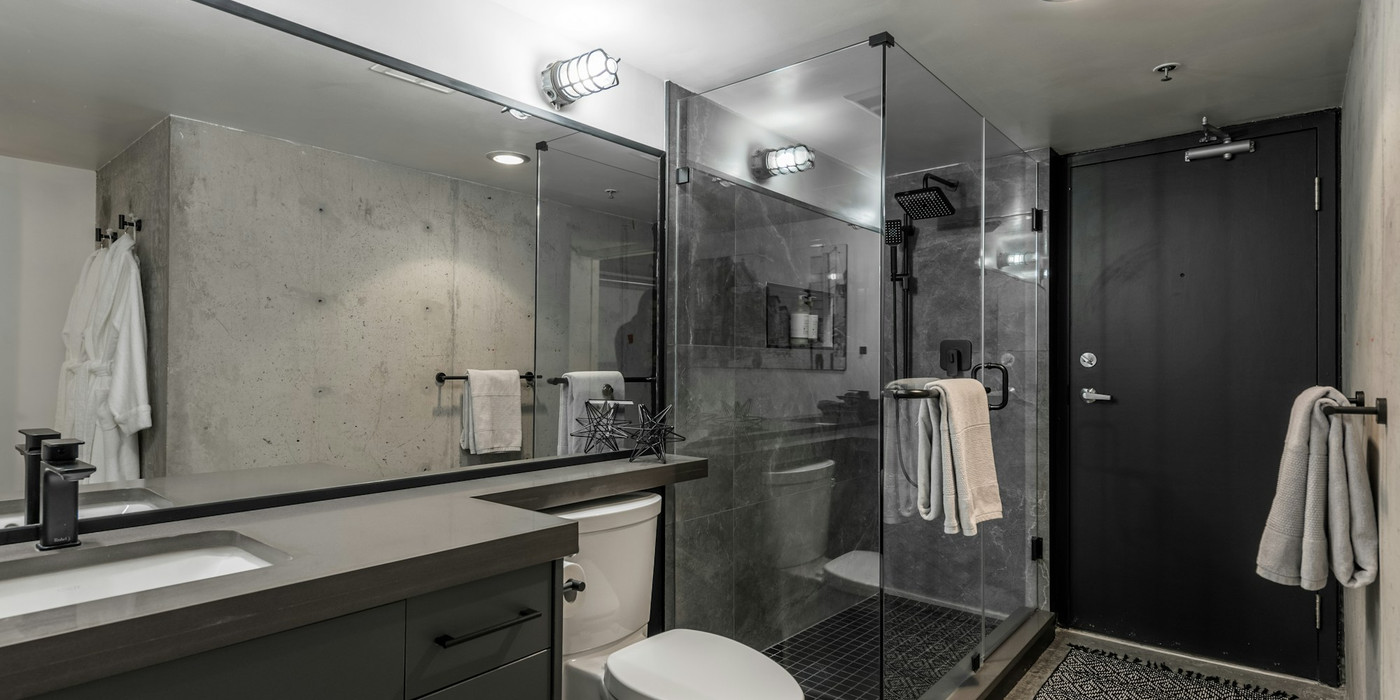
Every other room in a rental gives way if you keep at it. Ovens surrender. Walls wipe. Floors come back.
Bathrooms are the room where cleaning harder eventually stops working. There’s a point on a shower screen, in a grout line, along a bead of silicone, where the next hour of scrubbing produces exactly the same photograph as the last one — and that is the moment renters start assuming they’ve lost, and agents start writing quotes.
The Director’s Guideline on cleanliness has a sentence written for precisely that moment. Most people have never read it.
The bathroom line, in the guideline’s own words
Consumer Affairs Victoria’s Director issues guidelines under section 486 of the Residential Tenancies Act 1997, and VCAT must have regard to them when determining applications under sections 211B and 452 — the sections a bond dispute runs through.
Guideline 2 (Cleanliness) sets out what “reasonably clean” looks like room by room. The bathroom gets one line, and it is worth reading closely:
“Baths, showers, toilets, sinks and vanity units to be free from dirt/dust, stains, soap scum and mould caused by renter’s failure to take care.”
Three more items in the same list land in a bathroom:
- “Mirrors to be free from dust, marks, and smears.”
- “Floors to be washed and free from dirt, dust, and stains.”
- “Heating ducts and exhaust fans to be clean and free of dust.”
That’s the standard. Not “as new”. Not “like the photos on the listing”. A list.
The sentence that ends most bathroom arguments
Immediately before the room-by-room list, the guideline defines what clean enough means:
“Generally, an item or surface may be considered reasonably clean if it is free from marks, dirt, cobwebs, stains or dust etc. and cannot be further improved by additional cleaning to a reasonable standard (e.g. wiping down a benchtop again doesn’t produce a higher standard of cleanliness).”
And just above that:
“Cleanliness should be measured according to average standards in the community. It does not mean spotless or pristine nor does it mean terribly messy; the standard should sit somewhere in the middle and will depend on the nature, age, and circumstances of the rented premises.”
Read those two together and the cloudy shower screen problem resolves. If the surface has been cleaned to a reasonable standard and further cleaning produces no further improvement, the remaining appearance is a property of a fifteen-year-old screen in a hard-water suburb — the “nature, age, and circumstances” the guideline tells you to account for. It is not evidence that you failed to clean.
How to prove it: clean, photograph, clean the same surface again, photograph again. Two identical photos taken twenty minutes apart are the clearest form this argument takes.
Soap scum is named twice, and the second time matters
Soap scum appears in the reasonably-clean list, which is unsurprising. It also appears in a second place that most renters never reach — the guidance on professional cleaning.
Regulation 12 of the Residential Tenancies Regulations 2021 prescribes a clause that must be in every residential rental agreement:
“The residential rental provider must not require the renter to arrange professional cleaning or cleaning to a professional standard at the end of the tenancy unless — professional cleaning or cleaning to a professional standard was carried out to the rented premises immediately before the start of the tenancy and the renter was advised that professional cleaning … had been carried out …; or professional cleaning or cleaning to a professional standard is required to restore the rented premises to the same condition they were in immediately before the start of the tenancy, having regard to the condition report and taking into account fair wear and tear.”
The guideline then gives examples of the second limb, and one of them is “Soap scum build up in the bath or shower.”
So the honest picture is two-sided. A serious build-up over a long tenancy is on the short list of things that can justify a professional clean requirement. But it has to be measured against the condition report and against fair wear and tear — and the guideline is emphatic that the “immediately before the start of the tenancy” wording in the first limb means what it says. Cleaning done “months or even years prior” to your move-in doesn’t unlock that clause.
If you were never told the property had been professionally cleaned immediately before you moved in, and the bathroom is in the condition it was in when you got it, there is no professional cleaning requirement to meet. There is only “reasonably clean”.
“Mould caused by renter’s failure to take care” — read the last five words
The bathroom item does not say mould. It says mould caused by renter’s failure to take care. That qualifier is doing all the work, and the guideline repeats it in its list of key factors:
“The presence of mould or damp, and whether the mould or damp was caused by a renter’s failure to take care of the premises, as compared to mould or damp caused by or related to the building structure.”
Underneath that sits the rental minimum standards, which require each room to be free from mould and damp caused by or related to the building structure — a rental provider obligation, not yours — and require bathrooms, shower rooms, toilets and laundries to have ventilation meeting the Building Code of Australia standards. Those standards apply if you moved in on or after 29 March 2021.
The practical split: black spotting on a ceiling above a shower with no working exhaust fan is a building problem. A film on the silicone in a room you never ventilated is closer to yours. We’ve written the whole test out in who actually pays for mould in a Victorian rental, including what to do the day you first see it — which is the single decision that determines who wins this one.
Silicone, grout and hard water: nobody published a line
Search the two guidelines for “silicone” or “grout” and you will not find them. There is no published rule, which cuts both ways — but the general principles are not neutral here.
Guideline 3 (Damage and fair wear and tear) says it plainly:
“Fittings and fixtures deteriorate over time. Normal living in a property causes a decline in the standard of that property. The RRP is not entitled to compensation merely because things wear out.”
And regulation 90 of the Regulations prescribes the ATO Rental Properties 2020 Guide as the depreciation scale VCAT must consider when working out compensation for a damaged part of the premises. The guideline’s worked example is carpet: a renter of eight years “could not be expected to pay for the replacement of carpet at the end of the tenancy given carpet is considered to have an 8-year life span.”
The closest bathroom precedent the guideline records is a claim VCAT diluted for “damaged jet covers in a spa bath where covers were already fatigued.” Age of the fitting, not the state you left it in, decided it.
So when a claim arrives for resiliconing a shower or regrouting a floor, the questions are: how old is it, what did the condition report say about it on day one, and is this deterioration or damage? A bead of silicone that has discoloured over eight years of ordinary showering is wearing out. That is the category the guideline says nobody gets compensated for.
Exhaust fans, and the height rule most people miss
The exhaust fan item comes with a qualification attached in the same bullet:
“Heating ducts and exhaust fans to be clean and free of dust. Note, cleaning at heights may often be considered maintenance which is the responsibility of the RRP. Renters are not expected to access ceiling fans where access may be dangerous.”
A wall-mounted fan you can reach from the floor is a wipe-down. A ceiling unit you’d need a ladder in a wet room to reach is arguably maintenance. Don’t climb, and don’t accept a deduction for not having climbed.
What to do before the inspection
- Open the condition report first. Everything above is measured against day one, not against a showroom. If the screen was already etched or the grout already stained when you moved in, that’s the baseline — and if the incoming report is thin, our condition report guide covers what to do about it.
- Clean to a reasonable standard, then photograph. Then clean the same spot again and photograph again. That’s your “cannot be further improved” evidence.
- Check whether the professional cleaning clause is even available to them. Were you told, in writing, that professional cleaning happened immediately before you moved in?
- Work the bathroom into the rest of the handover using the room-by-room checklist, so the bathroom isn’t the thing you’re still doing at 9pm the night before.
- If a claim arrives for silicone, grout or a new screen, ask for the age. Then ask which line of Guideline 3 makes it damage rather than wear.
The short version
- The bathroom standard is one line in Guideline 2 — baths, showers, toilets, sinks and vanity units free from dirt, dust, stains, soap scum and the mould you caused — and reasonably clean explicitly “does not mean spotless or pristine”.
- A surface that “cannot be further improved by additional cleaning to a reasonable standard” already meets the standard; two photos twenty minutes apart is how you show it.
- Silicone and grout appear in neither guideline, but “the RRP is not entitled to compensation merely because things wear out” does — so a resiliconing or regrouting claim starts with the age of what was already there.
Frequently asked questions
What does Victorian law actually require me to clean in the bathroom?
The Director's Guideline on cleanliness lists it directly — "Baths, showers, toilets, sinks and vanity units to be free from dirt/dust, stains, soap scum and mould caused by renter's failure to take care." Mirrors get their own line ("free from dust, marks, and smears"), and so do exhaust fans ("clean and free of dust"). That list is the standard. VCAT must have regard to the guideline when determining applications under sections 211B and 452 of the Residential Tenancies Act 1997.
The shower screen still looks cloudy after I've cleaned it. Am I liable?
Probably not, and the guideline gives you the sentence. It says an item may be considered reasonably clean if it is "free from marks, dirt, cobwebs, stains or dust etc. and cannot be further improved by additional cleaning to a reasonable standard." Reasonably clean is also explicitly not spotless — the guideline says cleanliness "does not mean spotless or pristine" and should be "measured according to average standards in the community". If more cleaning to a reasonable standard produces no further improvement, you have met the standard.
Can they charge me for mould in the bathroom?
Only for the kind you caused. The cleanliness item is worded as "mould caused by renter's failure to take care", and one of the key factors the guideline lists is "the presence of mould or damp, and whether the mould or damp was caused by a renter's failure to take care of the premises, as compared to mould or damp caused by or related to the building structure." Structural mould is not a cleaning problem and is not yours. The rental minimum standards also require each room to be free from mould and damp related to the building structure.
Can they make me pay for new silicone or regrouting?
Not automatically. Neither guideline names silicone or grout, so nobody gets to quote a rule at you — it is argued on the general principles. Those principles favour the renter here — the damage guideline says "The RRP is not entitled to compensation merely because things wear out", and regulation 90 of the Residential Tenancies Regulations 2021 prescribes the ATO Rental Properties 2020 Guide as the depreciation scale VCAT must consider. VCAT has previously discounted a claim for damaged jet covers in a spa bath because the covers were already fatigued.
Can they require the bathroom to be professionally cleaned?
Only in two situations. Regulation 12 says a rental provider must not require professional cleaning at the end of the tenancy unless it was carried out immediately before the tenancy started and you were told so, or unless it is needed to restore the premises to their condition at the start, having regard to the condition report and fair wear and tear. The guideline's own example list for the second limb includes "Soap scum build up in the bath or shower" — so it can apply, but they still have to justify it against the condition report.
This guide is general information based on official sources current at the date shown above. Tenancy law differs by state and by agreement. For decisions about your own bond, check the official body linked above or get advice for your situation.
Keep reading
Mould is the argument I get pulled into most at the end of a lease, and it turns on one word: structure. Here's the line Victorian law draws between mould that's the rental provider's problem and mould that's yours, why structural mould is an urgent repair, the minimum standard that says rooms must be free from it, and the evidence that settles it.
Victoria's Residential Tenancies Act says damage does not include fair wear and tear, which it defines as deterioration from reasonable use and natural forces. Consumer Affairs Victoria's Guideline 3 gives side-by-side examples, and VCAT has to weigh the age of an item using the ATO depreciation guide. An 8-year-old carpet is the example CAV uses for one a renter can't be charged to replace.
In Victoria a rental provider or agent can only list you on a tenant database after the lease has ended, and only if a breach left you owing more than the bond or led to a VCAT possession order. They have to warn you in writing and give you 14 days to object first. A listing is gone after three years at most, and sooner if you pay what you owe within three months.