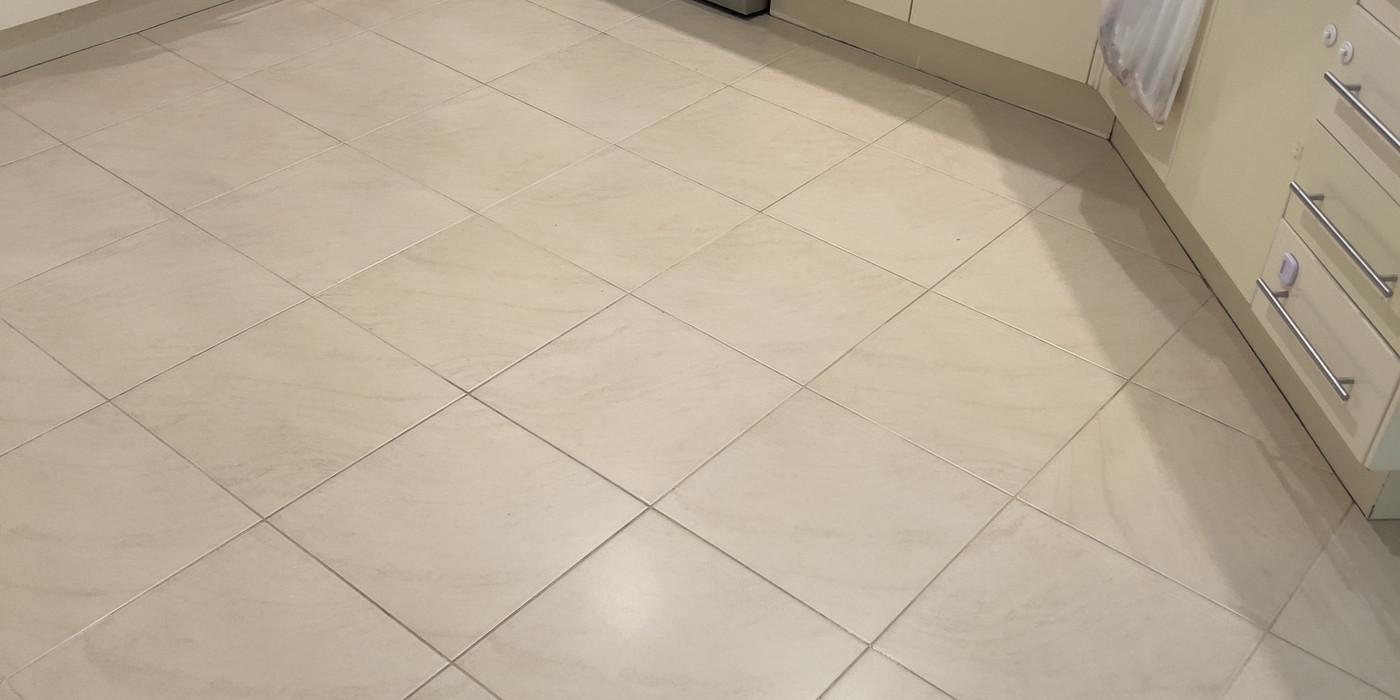
Exit reports run longest in the kitchen. Not because kitchens are dirtier than bathrooms — in my experience they usually aren’t — but because a kitchen is the room broken into the most separately listed items on a condition report. A bedroom is four or five lines. A kitchen can be twenty.
And almost all of the argument goes to one of them. I’ve written about the oven and what Victoria actually requires of it on its own, because it deserves its own page. This is about the other lines — the ones that quietly account for most of the money, because they are far harder to argue with.
What the guideline actually names in a kitchen
Consumer Affairs Victoria issues Director’s Guidelines under section 486 of the Residential Tenancies Act 1997, and Guideline 2 covers cleanliness. It matters for one reason, stated in the guideline itself:
“VCAT must have regard to this guideline when determining an application under sections 211B and 452 of the Act regarding the cleanliness of the rented premises.”
Its section on “what is expected of reasonably clean premises” is a list of examples. Pull out the ones that land in a kitchen and this is the whole of it:
| The guideline’s own words | What that is in your kitchen |
|---|---|
| “Cooking appliances including the oven, stove and rangehood to be free of oil, grease, and food stains.” | Oven, cooktop, rangehood — including its filter, which is where the grease sits |
| “Dishwasher to be clean, that is free from grease, grime, food scraps and any strong odours.” | The whole cavity, the seal, and the filter that causes the odour |
| “Kitchen sink to be free from soap scum and food scraps.” | Sink, and in practice the taps and drain rim |
| “Cupboards emptied and free from dust and dirt.” | Every cupboard and drawer, inside |
| “Heating ducts and exhaust fans to be clean and free of dust.” | The exhaust fan and any duct vent in the room |
| “Floors to be washed and free from dirt, dust, and stains.” | Floor, including under the kickboards where it’s accessible |
| “Walls and skirting boards to be reasonably free of scuff marks, fingerprints, and dust.” | Splashback wall, the wall behind the bin, skirtings |
Seven lines. That is the kitchen, as far as the document VCAT has to consider is concerned.
The standard those seven lines are measured at
This is the part worth reading twice, because it is the sentence that decides how hard you have to work:
“Cleanliness should be measured according to average standards in the community. It does not mean spotless or pristine nor does it mean terribly messy; the standard should sit somewhere in the middle and will depend on the nature, age, and circumstances of the rented premises.”
And then the finish line, which the guideline illustrates with — of all things — a kitchen surface:
“Generally, an item or surface may be considered reasonably clean if it is free from marks, dirt, cobwebs, stains or dust etc. and cannot be further improved by additional cleaning to a reasonable standard (e.g. wiping down a benchtop again doesn’t produce a higher standard of cleanliness).”
If another pass wouldn’t change it, you’re done. Not when it looks new — when more cleaning stops helping.
The other half of the test is your starting point. The guideline records that VCAT “has held that ‘reasonably clean’ does not mean a condition which is superior to that documented in the condition report”. Your entry report is the ceiling, which is the whole reason the condition report decides your bond rather than the exit inspection does.
What’s on the agent’s sheet but not in the guideline
Compare that seven-line list against the kitchen section of a typical vacate checklist and a few things are on one and not the other: the splashback as its own item, the inside of the rangehood canopy, cupboard doors and handles, the fridge cavity and its seals, kickboards, the dishwasher filter as a separate line.
Two honest things to say about that gap.
First, it is not an exemption. The general test still applies to everything in the room — a greasy cupboard door is not reasonably clean just because the word “door” doesn’t appear in a list of examples, and the guideline’s list is explicitly a set of examples rather than an exhaustive schedule.
Second, what the gap does change is which document you’re being measured against. An agent’s checklist is not law and has no standing at VCAT. The guideline does. So when a sheet asks for something the guideline never mentions, and it isn’t in your agreement, and it wasn’t the condition at entry, you are entitled to treat it as a preference rather than an obligation.
The one line that can move the cost off you
Tucked into the exhaust fan entry is a qualification most people never read:
“Heating ducts and exhaust fans to be clean and free of dust. Note, cleaning at heights may often be considered maintenance which is the responsibility of the RRP. Renters are not expected to access ceiling fans where access may be dangerous.”
Height converts cleaning into maintenance, and maintenance is the rental provider’s duty, not yours. In a kitchen that most often applies to a ducted exhaust vent in the ceiling. Don’t stretch it — a rangehood at normal bench height is plainly reachable — but if you’d need a ladder and a spotter for it, that sentence is the one to quote.
Worn is not damaged, and the kitchen has its own examples
Cleaning is one argument. Condition is a different one, governed by Guideline 3, and it happens to use kitchen items in both of its columns:
| Fair wear and tear | Damage |
|---|---|
| “Worn/ faded kitchen bench top” | “Burns or cuts in the kitchen bench top” |
That is a sharper line than most exit reports draw. A benchtop that has gone dull and pale after eight years of use sits in the left column. A knife cut through the laminate or a scorch ring from a hot pan sits in the right.
Guideline 3 also lists claims VCAT has knocked back or reduced, and one of them is straight out of a kitchen:
“Loose kitchen drawers which were 12 years old and more prone to wear.”
The principle behind both is stated plainly:
“The RRP is not entitled to compensation merely because things wear out.”
If they want something replaced
Then age enters the calculation, and not as an opinion. Regulation 90 of the Residential Tenancies Regulations 2021 prescribes the ATO’s Rental Properties 2020 guide as the depreciation scale, and Guideline 3 says VCAT “must consider the depreciation scale in the Guide, when determining compensation payable by a renter for the damaged part of the rented premises.”
The guideline’s worked example is about carpet — “A renter who has been in a property for 8 years, for example, could not be expected to pay for the replacement of carpet at the end of the tenancy given carpet is considered to have an 8-year life span” — but the mechanism is general. If a cupboard door or a benchtop is being replaced, what you could owe is a share of remaining life, not the invoice.
The order I’d work in
- Empty everything first. “Cupboards emptied” is the literal wording, and an agent can’t assess a cupboard that still has your baking trays in it. Empty cupboards, drawers, the pantry, and under the sink.
- Top down. Anything above bench height first, so what you dislodge falls onto surfaces you haven’t done. That means the rangehood and its filter, and the exhaust vent if it’s safely reachable.
- Then the appliances. Dishwasher cavity, seal and filter; the oven and cooktop as their own job.
- Then benches, splashback and sink, in that order, so the sink takes the run-off.
- Cupboard interiors, then doors and handles.
- Floor last, including the edge along the kickboards.
- Photograph all of it before you hand back the keys. Tenants Victoria’s advice is to “take plenty of photos and videos throughout the entire property, both inside and out, before returning the keys” — and in a kitchen the useful shots are close-ups of open cupboards, the filter, the sink and the benchtop, matched to the same angles in your entry report.
If you decide to pay someone rather than do it, that’s a legitimate call about your own time. Make it knowing what end of lease cleaning actually costs first, and not because a clause you haven’t checked against regulation 12 told you to.
If it comes out of your bond anyway
The bond has its own process and its own clock, and it doesn’t wait for you to agree with the exit report. Consumer Affairs Victoria states that rental providers “must start a claim with the RTBA within 14 days of the rental agreement ending, unless a renter initiates a claim first”, and that “Any renter with their name on the bond can start the bond claim themselves after the agreement ends.” Starting it yourself is often the better move; the full sequence is in how to get your bond back in Victoria.
What you want in hand is short: the entry condition report, your entry close-ups, your exit close-ups, and the cleaning clause from your agreement. Against a claim that quotes an agent’s checklist, the Director’s Guideline is the document the tribunal is required to have regard to — and the checklist isn’t.
The short version ① Guideline 2 names exactly seven kitchen lines — cooking appliances, dishwasher, sink, cupboards, exhaust fans and ducts, floors, and walls and skirtings — and VCAT must have regard to it, which no agent’s checklist can claim ② The bar is “average standards in the community”, explicitly “not spotless or pristine”, and an item is finished when further reasonable cleaning “cannot be further improved” — the guideline’s own example is wiping a benchtop twice ③ “Worn/ faded kitchen bench top” is fair wear and tear; “Burns or cuts” is damage — and because “the RRP is not entitled to compensation merely because things wear out”, age is a defence, not an aggravation
Frequently asked questions
Do I have to clean inside the kitchen cupboards in Victoria?
Yes. Consumer Affairs Victoria's Director's Guideline 2 on cleanliness lists "Cupboards emptied and free from dust and dirt" among the examples of what is expected in premises that are reasonably clean. VCAT must have regard to that guideline when it decides a cleanliness dispute, so it is the closest thing to a definitive list you will find. Note the wording — emptied, and free from dust and dirt. It does not say resurfaced or as-new.
Can the rental provider charge me for a worn kitchen benchtop?
Not for wear. Director's Guideline 3 puts "Worn/ faded kitchen bench top" in the fair wear and tear column and "Burns or cuts in the kitchen bench top" in the damage column. The same guideline states that "The RRP is not entitled to compensation merely because things wear out." So the question is never how bad it looks — it is whether the mark is a burn or a cut you made, or the surface simply ageing.
Is the rangehood filter my responsibility?
The rangehood is named. Guideline 2 says "Cooking appliances including the oven, stove and rangehood to be free of oil, grease, and food stains", and a greasy filter is the usual reason a rangehood fails that description. The guideline does add, about exhaust fans and ducts, that "cleaning at heights may often be considered maintenance which is the responsibility of the RRP" — worth quoting if the unit is genuinely out of safe reach.
Do I have to pay for professional kitchen cleaning?
Only in the two situations regulation 12 of the Residential Tenancies Regulations 2021 allows. Either the premises were professionally cleaned or cleaned to a professional standard immediately before your tenancy started and you were told about it, or professional cleaning is needed to restore the premises to the condition they were in at the start, having regard to the condition report and allowing for fair wear and tear. A clause in your agreement that goes further than that cannot be enforced for agreements entered into after 29 March 2021.
What if the kitchen was already grubby when I moved in?
Then that is your ceiling, and the condition report is what proves it. Guideline 2 records that VCAT "has held that 'reasonably clean' does not mean a condition which is superior to that documented in the condition report". Entry photos of the inside of the cupboards, the rangehood and under the sink are worth more at that point than any argument about how much effort you put in.
This guide is general information based on official sources current at the date shown above. Tenancy law differs by state and by agreement. For decisions about your own bond, check the official body linked above or get advice for your situation.
Keep reading
The oven is the one appliance Victoria's cleanliness guideline names out loud, and the one VCAT has already said makes a property not 'reasonably clean'. But the standard is 'average community standards', not spotless, and a demand for a professional oven clean is only enforceable in two narrow situations set out in regulation 12. Here's the line, and how to hold it.
Victoria's Residential Tenancies Act says damage does not include fair wear and tear, which it defines as deterioration from reasonable use and natural forces. Consumer Affairs Victoria's Guideline 3 gives side-by-side examples, and VCAT has to weigh the age of an item using the ATO depreciation guide. An 8-year-old carpet is the example CAV uses for one a renter can't be charged to replace.
In Victoria a rental provider or agent can only list you on a tenant database after the lease has ended, and only if a breach left you owing more than the bond or led to a VCAT possession order. They have to warn you in writing and give you 14 days to object first. A listing is gone after three years at most, and sooner if you pay what you owe within three months.